HAPPY SUNDAY TO THE STREET
Just a reminder: our spin-off morning newsletter, Top Tickers, will hit inboxes first thing on Monday. We hope you find this new product as useful to your investing routine as we do.
But if not, no worries whatsoever. You can unsubscribe to Top Tickers at any time, and continue receiving The Street Sheet as usual. For now, enjoy our Sunday deep dives, and we’ll see you bright and early tomorrow.
— Brooks & Cas
CONGRESS WANTS BIG LANDLORDS GONE. MARKETS DISAGREE
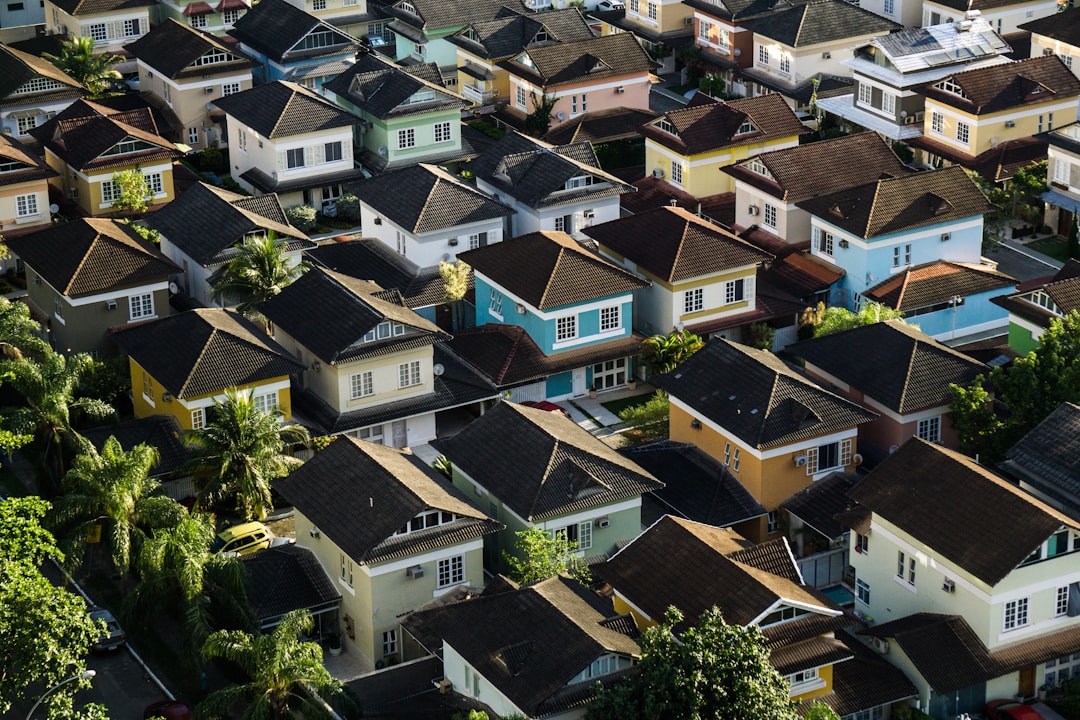
A bipartisan housing bill is turning Wall Street's biggest landlords into a value play hiding in plain sight.
Invitation Homes (INVH) and American Homes 4 Rent (AMH) together own roughly 140,000 single-family homes, and both stocks are trading well below the value of their underlying assets, according to real-estate research firm Green Street. The discount sits at about 30%.
Invitation Homes' finance chief Jonathan Olsen put it plainly at a recent conference: properties that could fetch $400,000 in today's market are being priced by investors as if they are worth $280,000. The last time the median US home cost $280,000 was 2012.
The sell-off traces to 2022, when rising mortgage rates pushed the stocks below net asset value, but the discount widened sharply after President Trump posted in January that he would ban large investors from buying family homes.
The Senate has since passed the 21st Century Road to Housing Act, which includes a provision barring landlords with more than 350 homes from purchasing additional properties, with limited exceptions for distressed homes and rent-to-own programs.
A separate provision would force build-to-rent developers to sell within seven years, a rule industry executives have called "uninvestible."
Here is the complication: these companies have mostly stopped buying from existing housing stock anyway. Over the past decade, they pivoted to building new homes, adding more than 300,000 units to supply, per data from John Burns Research and Consulting.
The seven-year forced-sale rule, if it survives the House, would undercut that supply. Fewer homes built could push rents higher, which would actually benefit the existing landlord portfolios. And the most contentious provisions could be stripped in the House.
In the meantime, both companies are selling homes to individual buyers at today's elevated prices and using the proceeds to buy back their own deeply discounted shares. Both stocks carry dividend yields above 4%. The bad news may already be in the price.
WHAT THE SHUTDOWN ENDING MEANS FOR TSA (HINT: NOT MUCH)

The government shutdown is set to end. The staffing crisis at TSA might not.
Early Friday morning, the Senate voted unanimously to fund the Department of Homeland Security through the end of the fiscal year, carving out Immigration and Customs Enforcement and Border Patrol from the package. The legislation moves to the House.
But acting TSA Administrator Ha Nguyen McNeill told Congress this week that more than 61,000 TSA employees have been working without pay for over 41 days, and that missed paychecks have approached $1 billion. More than 480 TSA officers have quit since February 14. And new hires require four to six months of training before they can work a checkpoint, meaning the staffing hole will not close quickly.
President Trump also announced he would sign an executive order directing immediate payment to TSA agents using funds from the One Big Beautiful Bill Act, but it remains unclear how that measure would speed up actual deposits.
Meanwhile, American Federation of Government Employees TSA Council 100 secretary-treasurer Johnny Jones told CNN that workers will not return until paychecks clear. TSA workers who received back pay after the November shutdown waited two to four weeks after that shutdown ended, according to Jones.
And then there’s the harder deadline that’s looming. The 2026 FIFA World Cup runs from June 11 to July 19 in the US. McNeill told Congress that any officers hired now will not complete training in time for the event.
For investors in airline stocks and travel-adjacent names, the operational picture at airports is not improving as quickly as the headlines might suggest.
THE PRIVATE CREDIT PARTY IS ENDING. NOW WHAT?

The private credit industry built a $1 trillion empire on opacity and high fees. Now investors want out, but the exits are narrow.
Business development companies, or BDCs, which hold junk-grade loans to private companies at yields near 10%, have fallen an average of 10% this year and recently traded at an average 25% discount to their year-end portfolio values, per Raymond James (RJF).
Semiliquid private funds like Blackstone (BX) Private Credit and BlackRock's (BLK) HPS Corporate Lending have seen withdrawal requests accelerate this quarter, with some funds limiting redemptions to their stated 5% quarterly caps.
Gresham Partners CEO Ted Neild told Barron's the structure has a built-in problem: quarterly redemption features layered onto an illiquid asset class create a first-mover panic. "People realize they have to get out first," he said, "otherwise they're going to be trapped."
The core issue may be one that the industry created for itself. Private credit started as an institutional product. The push into retail brought in roughly $180 billion in BDC assets and another $350 billion in semiliquid fund structures, with limited redemption windows.
Because private portfolios are opaque and borrowers rarely disclose financials, there is no way for investors to verify credit quality claims. Fees at Blue Owl Capital (OWL), Ares Capital (ARCC), and FS KKR Capital (FSK) can run five percentage points annually or more on net assets.
Instead of private funds, investors might consider public BDCs, which can currently be purchased at roughly $0.75 on the dollar relative to year-end portfolio values.
For those comfortable with the risk, public BDCs like Blackstone Secured Lending (BXSL) and Morgan Stanley Direct Lending (MSDL) yield an average of about 12%. The Van Eck BDC Income ETF (BIZD) offers broad exposure to the largest BDCs and currently yields above 12%.
BDCs trading at deep discounts also have buyback authorizations that they have largely not used. Repurchasing shares at these levels would signal more conviction than underwriting new loans at 8% to 9%.
5% in annual fees is a hard sell when the same manager's public fund trades at a 25% markdown.