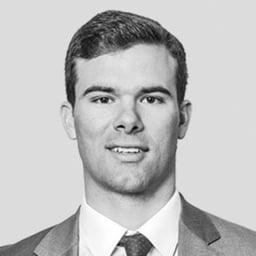
This is a private newsletter for CEOs, founders, and executives responsible for driving growth at their firms. It’s written by me, Brooks Dyroff, CEO of The Street Sheet.
Through our publishing division, The Street Sheet, and our advisory arm, The Street Sheet Studio, I’ve helped financial firms grow trust and distribution, working with organizations ranging from legacy institutions like J.P. Morgan to public fintechs like SoFi, RIAs managing billions in AUM such as Griffin Asset Management, and emerging companies like Augment Markets.
This year, I’m sitting down with executives we work with to extract practical insights on growth, positioning, and trust-building. I’ll be sharing those lessons privately with a small group of peers (aka, you).
If even one idea helps you grow more effectively in 2026, this newsletter has done its job.
Please treat these updates as confidential. If you’d like to add someone from your team, or if you no longer want to receive them, just reply.
Lastly, if you want help implementing proven growth marketing strategies like the ones discussed here, including content, lead generation, and compliance-ready distribution, you can find my calendar here.
HAPPY SUNDAY FROM THE C-SUITE
Hi Everyone - Brooks here, CEO of The Street Sheet. I hope the first month of 2026 is off to a good start.
We’ve been incredibly busy across the portfolio. The Street Sheet’s research division is about to get 100x better in February, and our studio division is almost at capacity.
We’re only going to onboard two new clients on the studio side next month so if you have any interest in working with us, let me know sooner rather than later by getting in touch here.
For what it’s worth, we’ve seen a ton of demand for our lead nurture buildout. Financial firms seem to be struggling with what happens after a lead submits a form, downloads an app, books a call, etc and then actually getting that person to take an action.
Said another way, someone might book a call to speak with a financial advisor, but then not actually show up to that call. Or, someone signs up to a fintech platform where you can invest in pre-IPO companies, but then fail to actually link their bank account and invest.
In the scenarios above, these financial advisors and fintech firms are paying good money on leads, but they aren’t actually converting them. Or, they’re not converting as many as they should.
This post lead nurture process is absolutely essential to win the trust of your prospects. If you’re spending money on leads and you don’t have this set up, please pause all of your marketing spend on lead gen and make sure you have this built out before you turn it back on. If you need help, let me know.
Alright, on to the show. I had a wonderful time speaking with Harmen Van Kamp, CEO of Global Air Cylinder Wheels. Let’s dive in.
— Brooks
INTRODUCING HARMEN VAN KAMP
He Literally Reinvented The Wheel: Global Air Cylinder Wheels CEO On Mining Tires, Safety, And The Future Of Transport
Harmen is the CEO and co-founder of Global Air Cylinder Wheels, an engineering company based in Phoenix that has spent more than a decade developing a non-pneumatic Air Suspension Wheel for massive off-road mining vehicles. The idea came from his partner, founder Dr. Zoltan Kemeny, a serial inventor who witnessed a tire dump fire and began questioning the inefficiency, danger, and environmental cost of rubber tires.
Harmen’s background is anything but linear. He grew up in Amsterdam, studied macroeconomics in Maastricht, worked across Germany and England, lived in Barcelona, where he met his wife (they were born on the same day, same year), and spent years building businesses in South Africa and Mexico before settling in Canada. Along the way, he introduced frozen coffee to Germany before Starbucks arrived, brought Vitamix blenders into Europe, and then seamlessly made the move into the mining sector.
That global path shows up in how he leads. He is comfortable with long timelines, skeptical of hype, deeply respectful of engineering rigor, and unusually honest about the personal toll of building something real.
You can watch our full conversation by clicking here or the video image above.
If you don't have time, here are three CEO-level insights from my discussion that translate well to any business being built in 2026:
1) Build for the long game, and choose investors who understand it
What stood out most is how unapologetic Harmen is about time horizons. He is not trying to compress a decade-long industrial adoption cycle into a venture-style sprint. He designs the business, the product, and even the capital stack around the reality of the market he operates in.
He said:
And then reinforced it with a warning that many founders only learn the hard way:
This isn’t theoretical. Mining projects take years to develop. Equipment decisions are conservative. Safety, regulation, and operational risk all slow adoption. Harmen understands that forcing speed into a system that cannot absorb it just breaks trust.
The takeaway for other CEOs is uncomfortable but critical.
If your business operates in enterprise, infrastructure, industrials, healthcare, or any regulated market, your biggest risk may not be product or demand. It may be misaligned capital.
Harmen is explicit that he wants investors who understand process, patience, and sequencing:
In 2026, as capital becomes more selective and less forgiving, founders who design their company around reality rather than investor expectations will be the ones still standing.
2. Shipping Early to Satisfy Demand Isn’t Always the Right Decision
What’s striking is that demand did not pull Harmen into premature selling. In fact, he did the opposite. Despite interest from some of the largest mining companies in the world, he made a conscious decision to stop selling entirely.
He said:
And the reason was not lack of demand. It was discipline.
This mindset runs counter to modern startup culture, where momentum, logos, and early revenue are often treated as proof of success. Harmen understands that in high-stakes environments, your first deployments become your reputation.
The takeaway for other CEOs is simple and hard.
Interest is not readiness. Demand is not permission to ship.
In 2026, when speed is often mistaken for execution, Harmen’s approach is a reminder that the cost of being early can be far greater than the cost of being late, especially when safety, trust, and long-term contracts are involved.
3. The Most Important Investment
The most revealing moment of the conversation came when I asked a hypothetical question about investing a million dollars that he could not put into his own company.
Harmen did not hesitate.
He talked openly about the emotional weight of leadership, the loneliness of decision-making, and how easily founders offload stress onto the people closest to them.
His point was not self-pity. It was clarity.
If the people around you are strained, your decisions suffer. If your headspace is fragmented, your leadership degrades. If your home life is unstable, no amount of traction compensates for it.
The takeaway for other CEOs is one that many ignore until it is too late.
Make sure you take time for yourself and your family so you’re buttoned up on the home front. This will help you think more clearly and make better decisions in the arena.
In 2026, as founders face longer cycles and more uncertainty, Harmen’s perspective is a reminder that resilience is not a personality trait. It is something you intentionally invest in.
En Fin
What ties Harmen’s insights together is a deep respect for reality.
Reality in timelines, where some businesses simply cannot be rushed.
Reality in product development, where shipping early can cost far more than waiting.
Reality in leadership, where the health of the company is inseparable from the health of the people building it.
Harmen’s approach is a reminder that the most durable businesses are not built on hype or acceleration for its own sake. They are built by leaders who understand their industry deeply, choose partners carefully, and protect their ability to think clearly over long stretches of time.
At The Street Sheet, we believe the same principles apply whether you’re running a mining technology company or a financial firm. Long-term growth comes from alignment, discipline, and first-hand understanding, not shortcuts.
That philosophy guides how we work with founders and executives through The Street Sheet Studio, where we help firms turn real expertise into durable distribution through content, lead generation, and compliance-ready marketing.
If this way of thinking resonates and you want help applying it to your business in 2026, you know where to find me. Let’s talk.