


HAPPY SATURDAY TO THE STREET
And welcome back to Street Tweets from The Street Sheet!
The Cybertruck survived sledgehammers, a shattered "armored" window at its own launch event, and endless memes.
But it couldn't survive the sales chart.
Elon Musk officially announced that Tesla (TSLA) will wind down Cybertruck production around the middle of next year to make room for its Cybercab robotaxi.
Tesla once figured it could sell 250K trucks a year. It has sold fewer than 100K in the US since deliveries began in late 2023.
So Musk will swap a truck nobody wants for a car nobody drives.
— Brooks & The Street Sheet Team
MARKET REVIEW & PREVIEW
Tuesday's blue wave lit up markets, and the Dow Jones Industrial Average jumped 3% on Wednesday for its best day since April 2025. But the glow faded just as fast, with Thursday bringing the worst post-midterms trading day in more than a century, as traders shifted focus to incoming lawmakers' hard line on data centers and AI.
Inflation takes the stage again next week. Tuesday brings October's Consumer Price Index, and investors will watch whether core CPI cools from September's 2.6% pace. Friday's Producer Price Index follows. After this week’s strong jobs report, hot readings on either would strengthen the case for tighter Fed policy.
Generational change of tune.
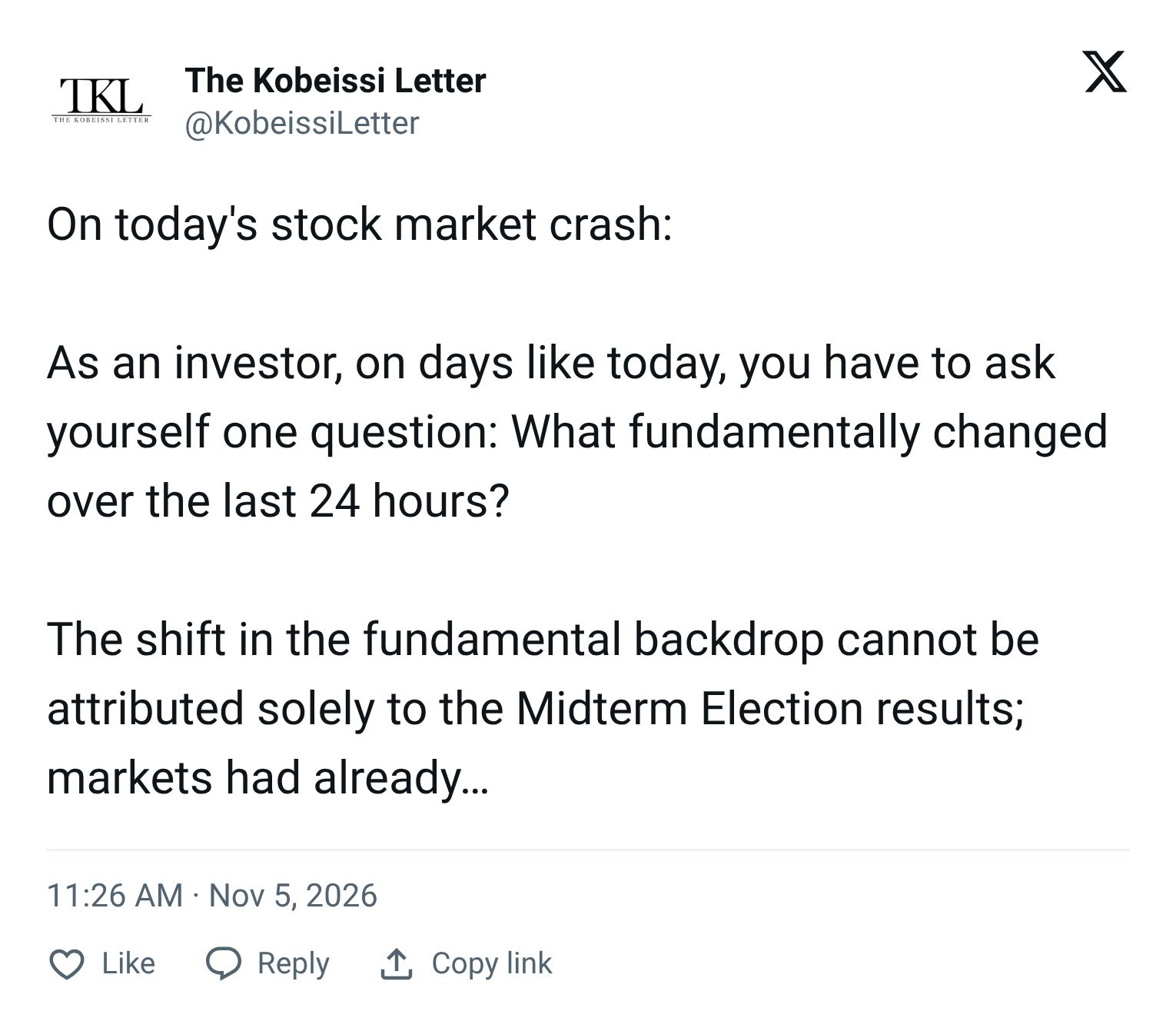
Kobeissi went viral earlier this year for predicting the theoretical AI apocalypse. Now, after a literal AI apocalypse, the firm had a different take: don’t fear!
Their thesis is that markets had already priced in the midterms, and an outright AI ban is a nonstarter if the US wants to stay ahead of China.
So what sank stocks on Thursday? Nervous sentiment + a market stacked with leverage = big funds have to sell, whether the quant said to or not.
In short, the AI trade didn't break on Thursday. A few margin accounts did.
Hot chips, hotter credit.
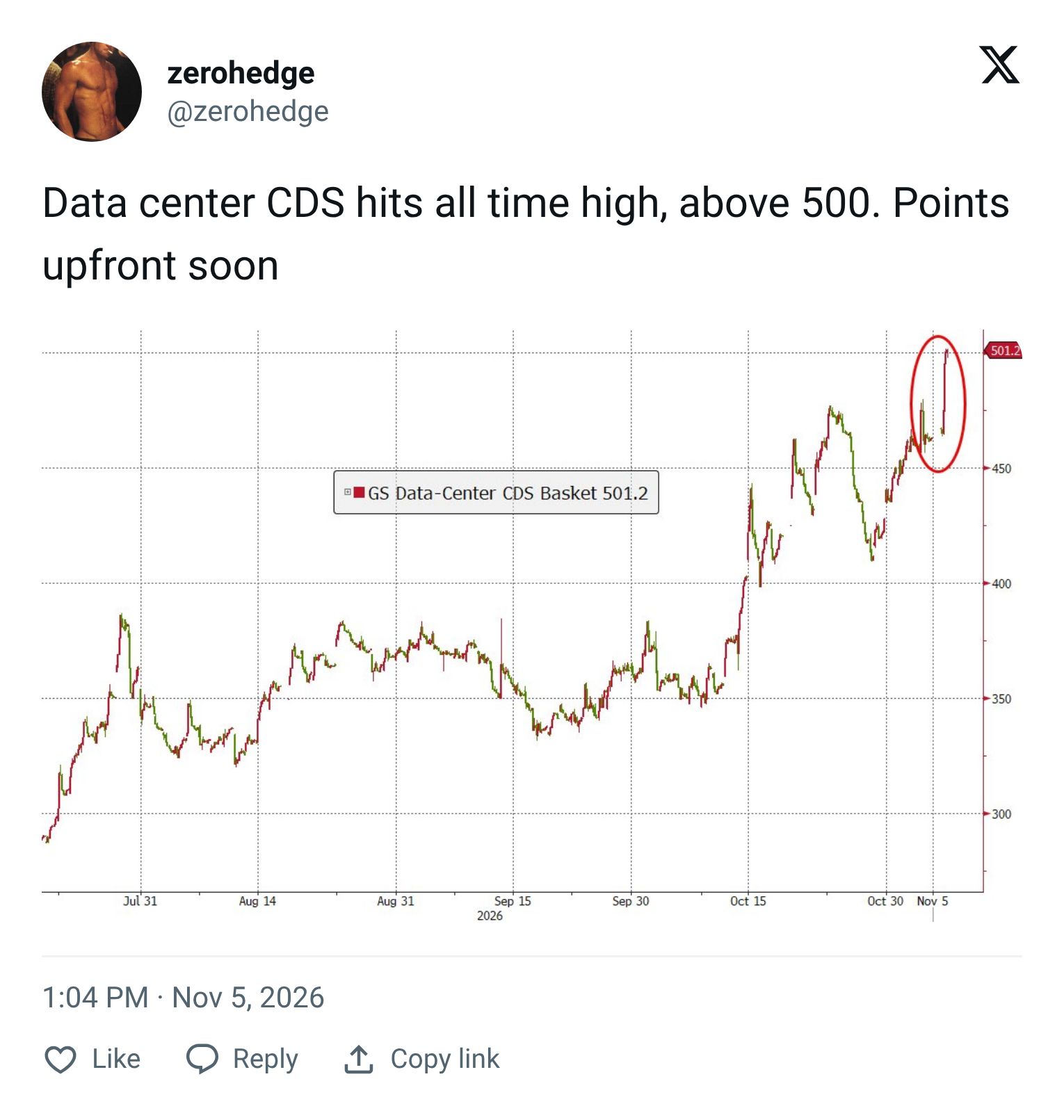
A credit default swap is insurance against a borrower defaulting. Goldman Sachs (GS) tracks a basket of data center credits, and protecting that debt now costs more than 5% of its face value per year.
Push much past 500 and protection starts trading on points upfront, meaning buyers pay cash on day one. That's how the market usually prices distressed borrowers.
The servers have liquid cooling. The lenders just have cold feet.

Zoning laws don't reach orbit.
So will Elon ship up with them as the sole on-site engineer?
Save this for the next red day.
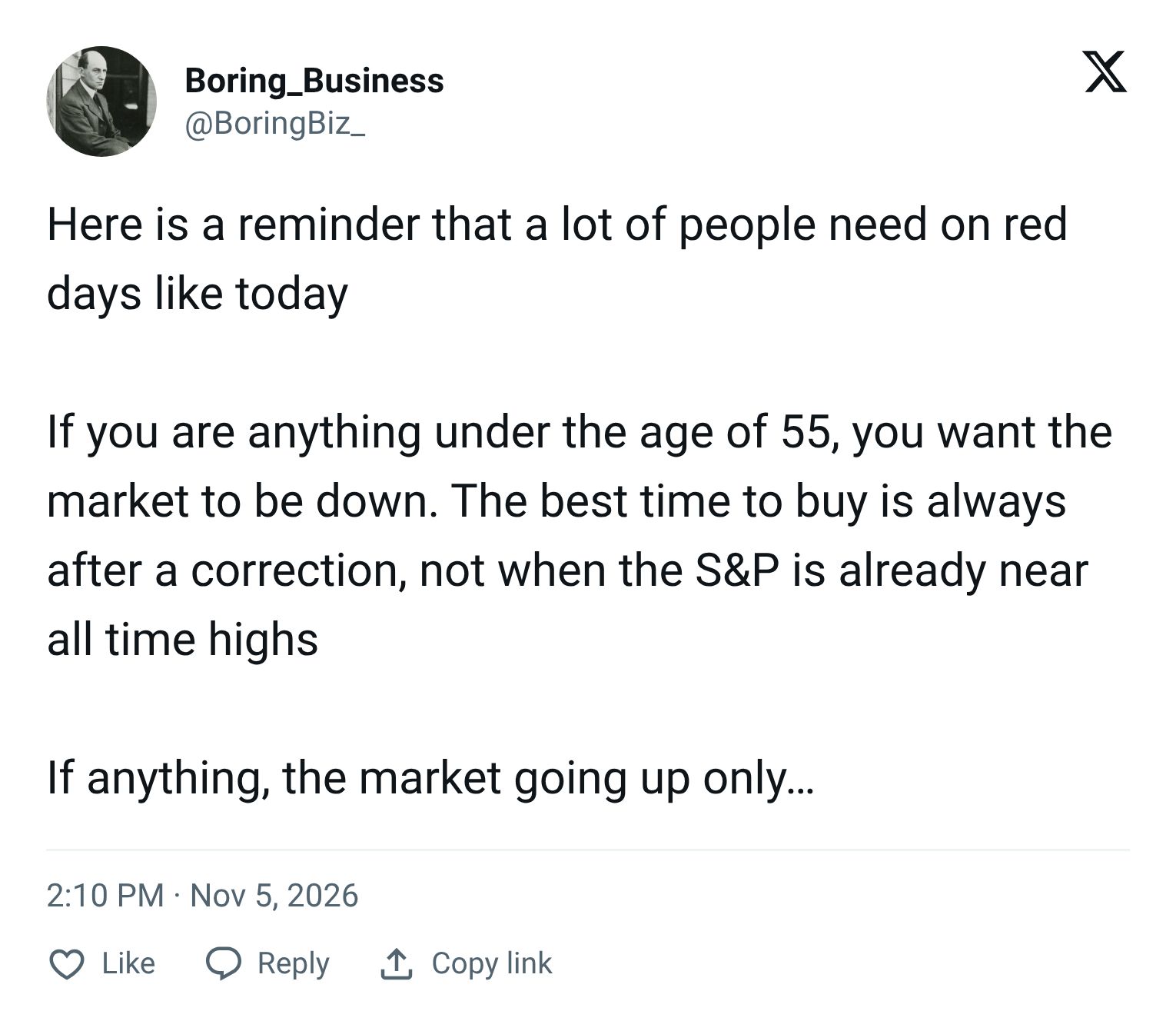
The full post is worth a read, since your inbox will probably cut it off.
The gist: for investors with a long runway before retirement, selloffs put the next dollars you invest on sale. Keep dollar-cost averaging into great companies and let time do the heavy lifting.
Closer to or already in retirement? Dividends and bond interest keep coming on red days, and a cash cushion buys you time to wait out the dip instead of selling into it.

A classic turnaround play.
It fits the portfolio: AOL, Evernote, and now a 172-year-old legacy brand coming off an historically rough Q2.


